🔬 In-Depth Research Report · AI Arms Industry Panorama
Silicon Valley Forges Cannons A Panorama of the New AI Arms Forces in the US and Europe
In 2025-2026, defense tech became Silicon Valley's hottest VC narrative. From a16z's "American Dynamism" to Europe's "ReArm Europe," from a 19-year-old dropout's arms company to Anthropic's legal battle with the Pentagon — this article maps the AI arms race spanning both sides of the Atlantic.
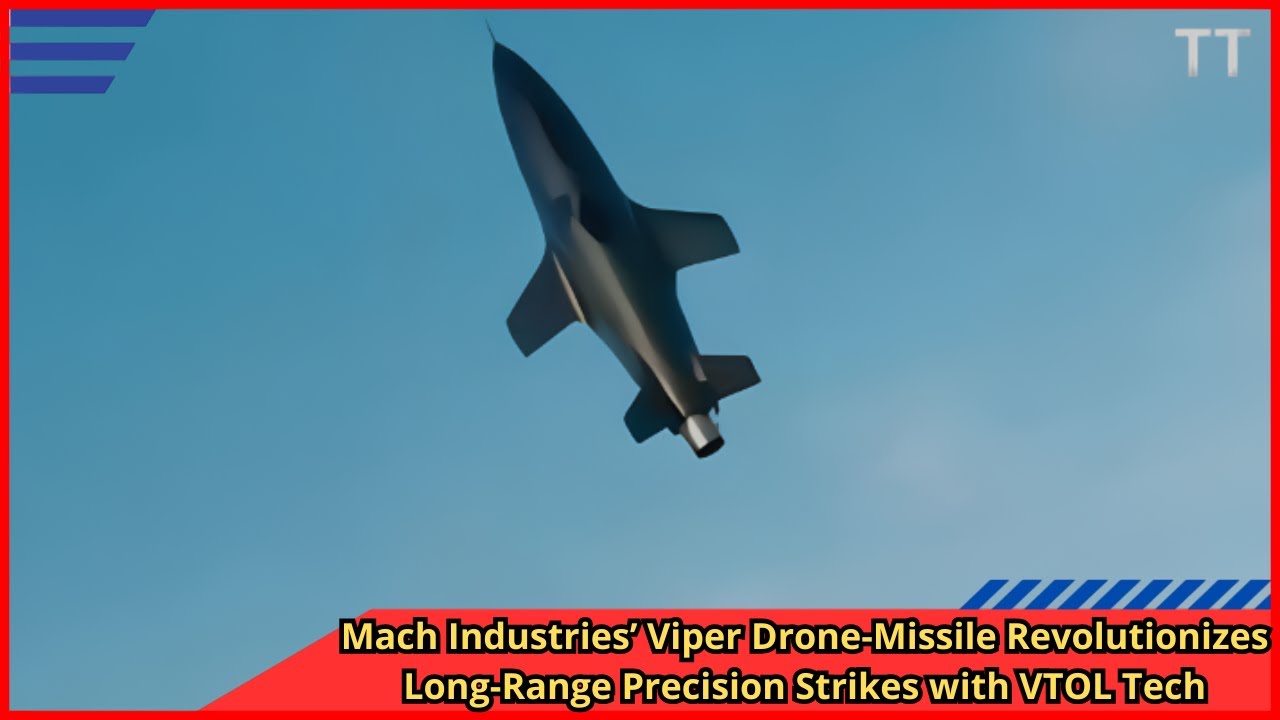
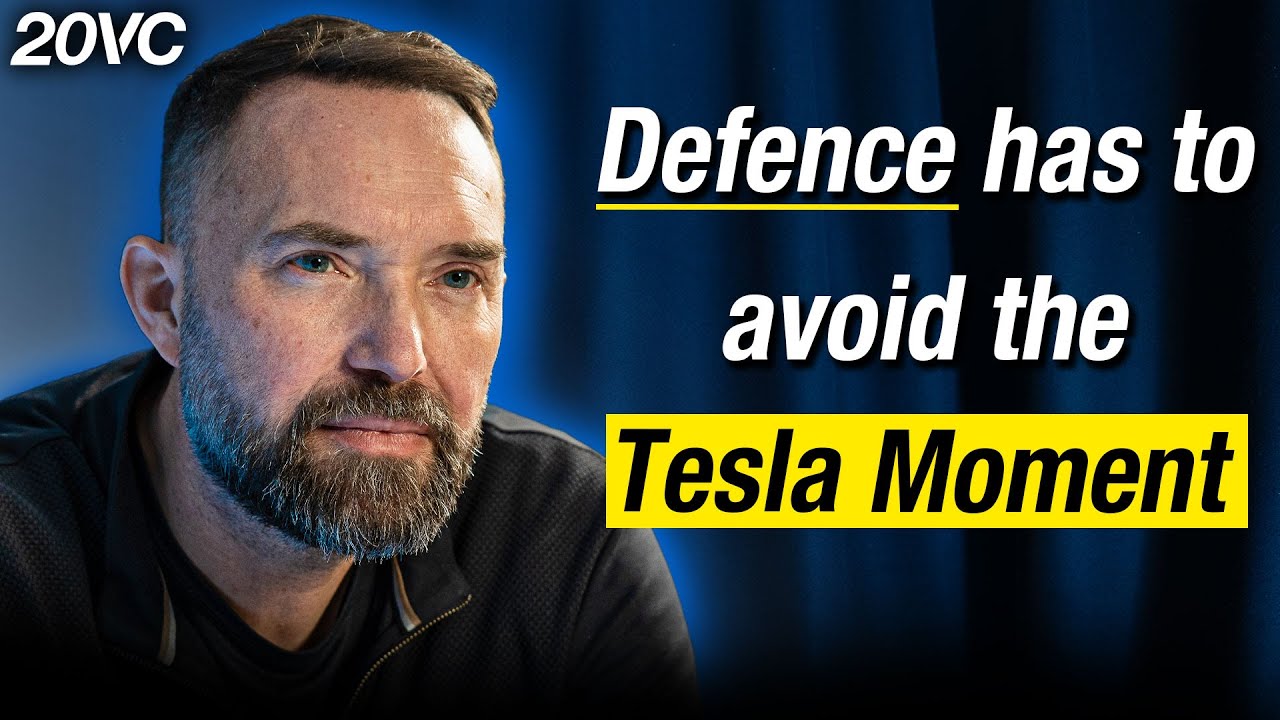
Dropped out of MIT at 19 to start the company; valuation hit $1.8B in June 2026, a 4x increase in one year
TechCrunch · June 2026
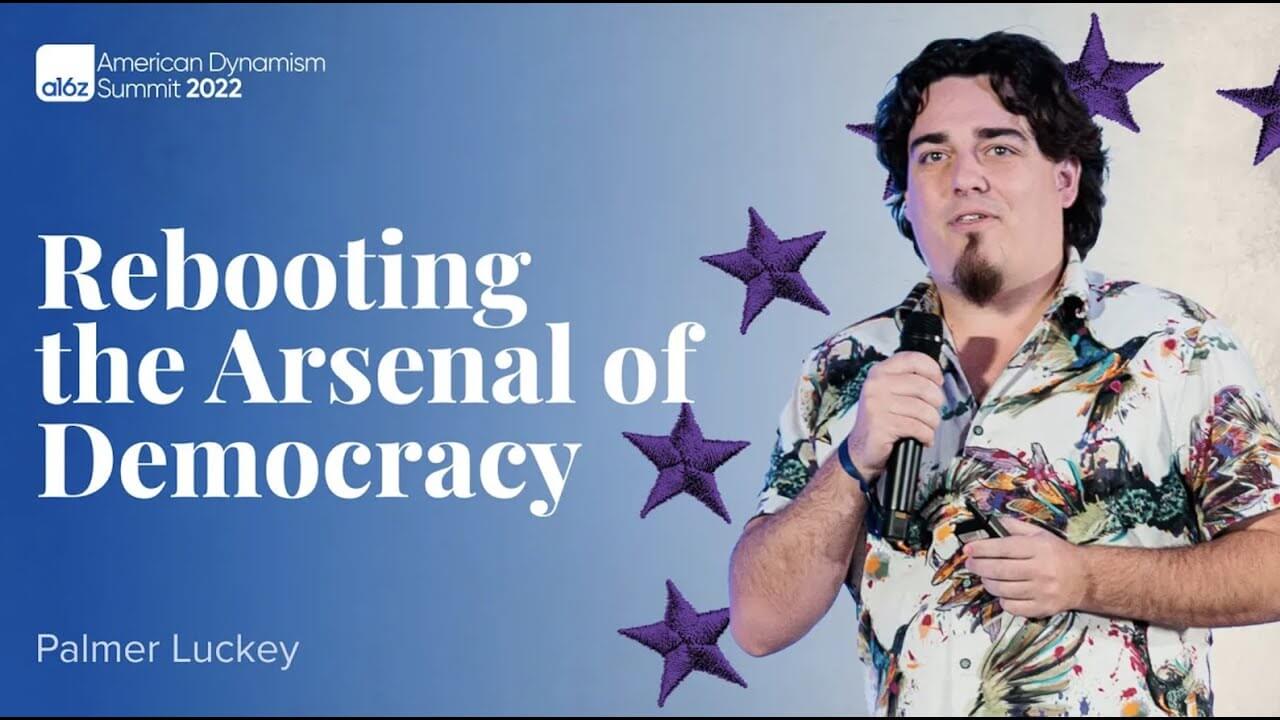
Palmer Luckey — Anduril founder, guest on a16z podcast
"Rebooting the Arsenal of Democracy": a16z and Anduril's founder jointly defined this defense tech narrative
a16z · American Dynamism Summit
a16z "American Dynamism 50" 2025 List
Using a Taiwan Strait conflict wargame as its narrative framework, featuring Anduril, Castelion, Saronic, and other defense tech companies
a16z.com · March 2025
Anduril Industries
Founded in 2017 by Oculus creator Palmer Luckey; 2026 valuation in talks to surpass $100 billion
Anduril Newsroom
🔄
Section 01
From "Rejecting the Pentagon" to "Racing to Embrace War"
Silicon Valley's decade-long reversal
In 2018, Google participated in the Pentagon's "Project Maven," using AI to analyze drone surveillance footage to assist target identification. Hundreds of employees signed a protest letter, and the company was forced to abandon the contract and pledge not to use AI for weapons. Eight years later, history has almost entirely reversed: in 2026, Google allowed Gemini to access military classified networks for "any lawful purpose." Nearly 600 employees protested, but management did not back down this time — having already quietly removed the weapons ban from its public AI principles in February 2025.
In January 2024, OpenAI quietly revised its usage policy, removing clauses that explicitly prohibited "weapons development" and "military and warfare" applications. OpenAI VP of Global Affairs Anna Makanju explained: "Because we had previously had a blanket ban on military uses, many people mistakenly thought that would prohibit some use cases that are actually very much in line with the world we want to see."
The Ukraine battlefield proved the effectiveness of drones and autonomous systems in real combat, fundamentally changing how VCs view defense investment.
a16z's "American Dynamism": Investing in Arms as "American Kinetics"
One of the most important capital drivers of this wave is the "American Dynamism" investment thesis established by a16z in 2022, led by partner Katherine Boyle. The annual "American Dynamism 50" list released in March 2025 notably used a "Taiwan Strait conflict" scenario as its narrative framework, featuring Anduril, Castelion, Epirus, Saronic, Shield AI, and other defense companies. a16z's framing is direct: "These 50 companies aren't just enhancing America's ability to deter conflict — they're also re-industrializing America in the process. That's the bigger win."
a16z · American Dynamism
China is already building autonomous weapons at scale. The question isn't whether the US should build them, but whether the US builds them first or cedes the rule-making to Beijing.
In 2023, a16z collaborated with Palmer Luckey on a podcast episode titled "Rebooting the Arsenal of Democracy" — borrowing the WWII historical metaphor of Roosevelt mobilizing American industry to aid allies. Anduril, Palantir, Saronic, and similar companies are dubbed "neoprimes" (new arms merchants), largely bypassing the cumbersome procurement processes of the traditional military-industrial complex of Lockheed Martin, Boeing, and Raytheon through simplified acquisition mechanisms.
🗡️
Section 02 · US
Anduril Industries
From Oculus founder to "American arms giant"
Anduril was co-founded in June 2017 by Oculus founder Palmer Luckey, Trae Stephens, Brian Schimpf (current CEO), and others, backed by early capital from Peter Thiel's Founders Fund.
Valuation Curve
2018
~$250M
2021 · Series D
$4.6B
2024.08 · Series F
$14B
Raised $1.5B, used to build Arsenal-1 megafactory
2025.06 · Series G
$30.5B
Raised $2.5B
2026.05 · Series H
$61B
Raised $500M
2026.07
In talks for $100B
Per Reuters/TechCrunch, over 3x in one year; 2025 revenue exceeded $2.2B, doubling YoY
Core Product Lines
🖥️ Lattice
AI command-and-control software fusing satellite, drone, radar, and camera data — Anduril's "operating system"
🚁 Ghost
Modular reconnaissance helicopter drone, ~100 min endurance, used by US and UK militaries
🎯 Anvil / Anvil-M
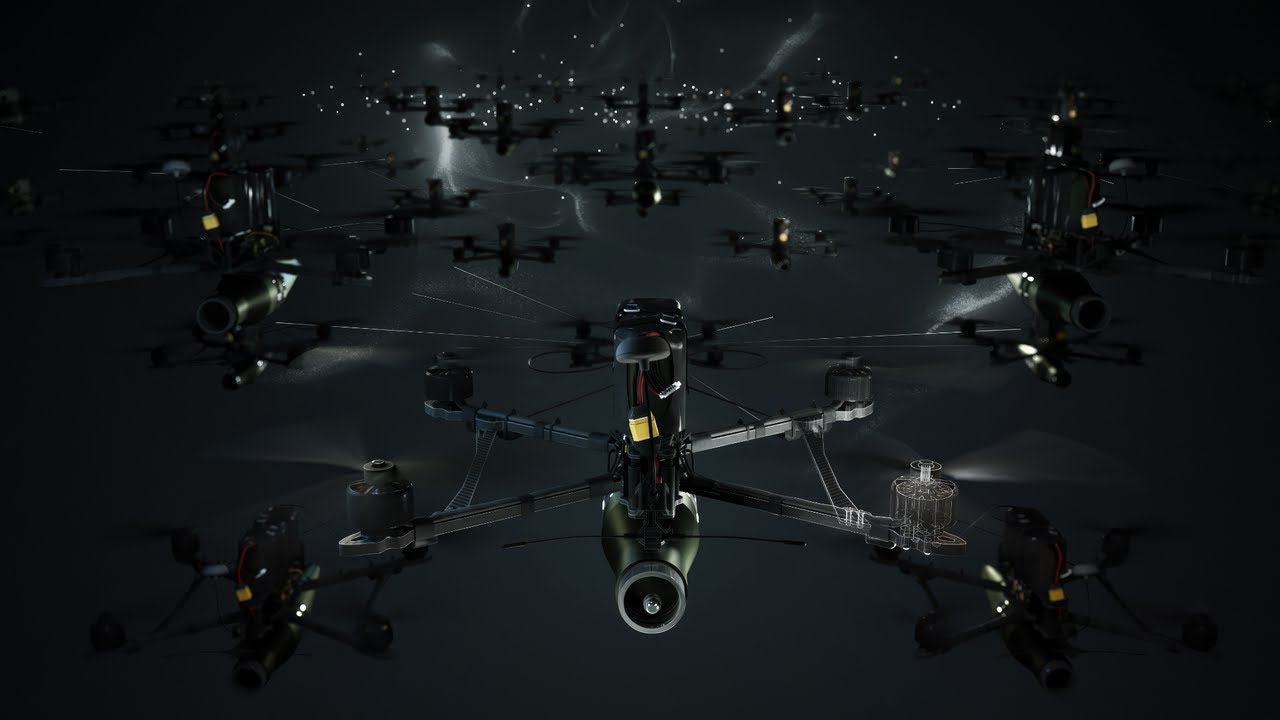
200 mph counter-drone interceptor quadcopter; Anvil-M is the self-detonating variant
🚀 Barracuda
Air-breathing cruise missile family, 160-800 km range, variable payload
Air Force "Collaborative Combat Aircraft" loyal wingman; first flight Oct 2025, mass production Mar 2026
Major Contracts
February 2025: Took over Microsoft's Army IVAS headset project (renamed EagleEye)
March 2026: Signed a up-to $20B, 10-year enterprise-level agreement with the US Army
September 2025: Signed an $1.1B "Ghost Shark" unmanned submersible contract with the Royal Australian Navy
December 2025: Bloomberg reported it was pursuing a major UK drone contract
The Founder's Philosophy of War
Palmer Luckey · CBS 60 Minutes
The choice isn't between smart weapons and no weapons — it's between smart weapons and dumb weapons.
Palmer Luckey
There's no moral high ground in giving a mine that can't tell the difference between kids in a school bus and Russian armored vehicles a badge of ethical superiority.
⚠️ Cracks in Reality
According to a November 2025 investigation by the Wall Street Journal, Anduril's autonomous systems have repeatedly "stumbled" in testing and combat: naval exercise unmanned boat failures, Fury ground test engine damage, Anvil counter-drone tests sparking a 22-acre wildfire in Oregon, and Ukrainian military reporting that Altius loitering munitions "crashed without hitting targets" and were discontinued in 2024. Anduril responded that this is "the norm in weapons development."
🚀
Section 02 · US
Mach Industries
A 19-year-old dropout's "blitzkrieg" playbook
Founder Ethan Thornton grew up in a military family in the small Texas town of Boerne; in high school he built a hydrogen gun prototype using "deer feeder batteries and electrolysis cells." He dropped out of MIT at 19 to start the company, and is a Forbes "30 under 30" honoree and Thiel Fellow. In 2023, a self-funded prototype test exploded, injuring a team member with shrapnel, and the company stalled until Sequoia's seed round closed — the first defense tech investment in Sequoia's history.
Round
Time
Amount
Valuation
Lead Investor
Seed
Mid-2023
$5.7M
—
Sequoia Capital
Series A
Oct 2023
$79M
$300M+
Bedrock Capital
Unnamed
Jun 2025
$100M
$470M
Khosla Ventures + Bedrock
Series C
Jun 2026
$300M
$1.8B
Infinite Capital, Ribbit Capital
Total funding approximately $485M. Worth noting: no evidence places Founders Fund or a16z on its investor list — Thornton's "Thiel Fellow" status is a personal fellowship from the Thiel Foundation, distinct from Founders Fund's venture investing.
The company initially bet on hydrogen-powered weapons, but pivoted entirely in early 2024 due to economic viability issues, focusing on turbojet-powered single-use strike drones like Viper (claimed cost 300x lower than traditional drones, ~180-mile range), along with glide munition Glide, stratospheric platform Stratos, mass-production munition Pike, and the anti-swarm interceptor Dart announced in January 2026.
Ethan Thornton
I don't think we can out-manufacture China in terms of volume... What America is truly good at is creativity and productization. This is a game played on a board with hundreds of different products.
⚠️ Controversy
In March 2025, a Viper promotional video was accused of using a Chinese-made turbine engine; Thornton denied any Chinese components. Company culture has also drawn criticism: former employees say the lobby featured a countdown timer reading "1800 days until Taiwan Strait invasion"; a former project manager criticized securing massive funding "without an actual product, without flight tests, without demos." As of now, no system has entered full-rate production.
✈️
Section 02 · US
Shield AI
Not building weapons — installing AI pilots into them
If Anduril sells hardware and Mach Industries sells speed, Shield AI sells something more abstract — the "brain" that lets aircraft fly and fight on their own.
Founders Brandon Tseng (President) and Ryan Tseng (current President & Chief Strategy Officer) are brothers, sons of a Taiwanese immigrant. Brandon's childhood dream was to become a Navy SEAL; after graduating from the US Naval Academy, he achieved that goal. During two Afghanistan deployments, he witnessed soldiers pushing through doors into buildings with zero information, clearing IEDs and engaging entrenched gunmen, paying the blood price — this experience became the starting point for all of the company's later products. Ryan previously founded wireless charging company WiPower and sold it to Qualcomm. When the two co-founded the company with technical co-founder Andrew Reiter in 2015, they were rejected by 29 out of 30 Silicon Valley investors, scraping together $100K from friends and family to build the first prototype, finally landing a $2.1M seed round led by Homebrew and Bloomberg Beta in 2016. Along the way, they even turned down an investor who demanded the company abandon its focus on "protecting soldiers and civilians" to chase a larger market.
The core product is Hivemind — an AI pilot software system that enables aircraft to make autonomous decisions without relying on continuous remote human control. In 2018, the Nova quadcopter drone equipped with Hivemind became the first AI-piloted drone deployed in combat, used by US Special Operations Command for reconnaissance and mine-clearing before building entries. The real battlefield validation came from Ukraine: V-BAT drones completed over 130 sorties and identified 200+ Russian targets in the Ukraine theater, currently the only long-endurance drone platform that can simultaneously penetrate both Ukrainian and Russian electronic warfare environments while completing reconnaissance and strike missions.
Brandon Tseng · Shield AI Co-Founder
Congress doesn't want that... nobody wants that. (On fully autonomous lethal decision-making)
The relationship with Anduril is more nuanced than it appears: In March 2026, Shield AI's Hivemind was selected by the US Air Force to provide autonomous navigation for the "Collaborative Combat Aircraft" (CCA) program — and the platform it actually serves is Anduril's YFQ-44A "Fury" loyal wingman. Among this cohort of Silicon Valley's new arms merchants, the relationship is less pure competition and more like a supply chain: Anduril builds the airframe, Shield AI installs the "brain."
Series G also included $500M preferred stock + $250M delayed-draw credit facility from Blackstone. Valuation up 140% from a year prior, catalyzed by winning the Air Force CCA autonomous navigation supplier slot; in May 2025, former Splunk/Proofpoint CEO Gary Steele (who led Splunk's $28B sale to Cisco) became CEO, with Ryan Tseng moving to President.
Part of this funding was used to acquire flight simulation training company Aechelon Technology (founded 1998, specializing in geo-specific flight simulators and physics-based sensor AI training); the deal closed in June 2026, with Steele stating it would "accelerate Hivemind's capabilities on the simulation training side, especially for the DoD JSE program."
📋
Section 02 · US
Other Notable US New Forces
Company
Flagship Product
Founder/Background
Latest Funding
Castelion
Blackbeard hypersonic missile (~Mach 5)
3 former SpaceX employees, founded 2022
Series B $350M · Valuation $2.8B
Epirus
Leonidas high-power microwave counter-drone system
Joe Lonsdale (Palantir co-founder)
Series D $250M · Total $550M+
Saronic
Autonomous surface vessels Corsair / Marauder
CEO Dino Mavrookas
Series D $1.75B · Valuation $9.25B
Firestorm Labs
Containerized field 3D-printed drone factory
Dan Magy et al., San Diego team
Series B $82M · Total $153M
Worth noting: a16z is an investor in Saronic, but there's no evidence that a16z or Founders Fund invested in Mach Industries — even in this highly overlapping circle, different capital camps' betting logic is not entirely aligned.
🛡️
Section 03 · Europe
Helsing
"Europe's Anduril"
The Russia-Ukraine war has completely rewritten Europe's understanding of "strategic autonomy." The EU launched the approximately €800 billion "ReArm Europe" plan; global military spending reached a record $2.9 trillion in 2025 (SIPRI data). A NATO Innovation Fund and Dealroom report shows European defense, security, and resilience startups raised a record $8.7 billion in 2025, up 55% YoY.
Helsing was founded in Munich in March 2021 by computational biologist Torsten Reil, former McKinsey consultant Gundbert Scherf, and machine learning engineer Niklas Köhler, self-positioning as "a new type of defense company" that only sells to democracies.
2021 · Series A
€100M
Led by Daniel Ek (Spotify founder) through Prima Materia
2023 · Series B
€209M
General Catalyst lead
2024 · Series C
€450M · Valuation €5B
Saab participated
2025.06 · Series D
€600M · Valuation €12B
2026.07 · Series E
$1.8B · Valuation $18B
Largest single funding round for a European defense startup ever; Dragoneer, Goldman Sachs Alternatives among new investors
Core Products
🛩️ HX-2
Quadcopter loitering munition, AI navigation independent of GPS, ~100 km range, ~€17.5K unit price, 1,000+ produced monthly
🤖 Centaur
Autonomous AI "fighter pilot," completed live dogfight testing on Saab Gripen E in June 2025
✈️ CA-1 Europa
~4-ton autonomous uncrewed fighter aircraft, planned first flight 2027, service entry 2029
🌊 SG-1 Fathom
Autonomous underwater submersible, capable of loitering at 1,000m depth for 90 days
By early 2025, 4,000 HF-1 loitering munitions had been delivered to Ukraine; in February 2025, an additional order for 6,000 HX-2s was placed. Helsing stated: "This new order puts us among the world's largest attack drone manufacturers."
Torsten Reil · Resilience Conference October 2025
We should develop indigenous systems that we control ourselves — not just control over the technology itself, but ethical control as well.
⚠️ The founder himself is warning about the bubble
That same month at the Bloomberg Technology Summit in London, Reil made a rare public statement: "There will be consolidation; roughly 80% of these companies won't survive." — a self-warning that stands out amid the prevailing boom narrative.
📋
Section 03 · Europe
Other Notable European New Forces
Company
Country
Flagship Product
Key Information
Quantum Systems
🇩🇪
Trinity/Vector reconnaissance drones
Series D $1.2B · Valuation $8B; Germany has supplied 619 Vector systems to Ukraine
Tekever
🇵🇹
AR3/AR5 maritime intelligence drones
Pledged £400M UK investment over 5 years; AR5 selected to replace Watchkeeper
Stark
🇩🇪
OWE-V Virtus loitering munition
Raised €500M · Valuation over €3.5B; Sequoia and Founders Fund led
ARX Robotics
🇩🇪
Gereon-RCS uncrewed ground vehicle
Founded by 3 former Bundeswehr officers; JV with Ukraine's Roboneers
Comand AI
🇫🇷
AI-native battlefield C2 software
Series A €32M; Saab participated; French/German/Ukrainian forces already using
ICEYE
🇫🇮
Synthetic aperture radar satellite imagery
Series F ~$1.2B · Valuation over $12B; "People's satellite" helped Ukrainian forces discover 7,000+ targets
What's telling is that none of these companies' shareholder lists feature a16z or "American Dynamism" — the real bridges connecting US capital to European defense tech are General Catalyst, Sequoia Capital, Founders Fund, Blackstone/Advent, General Atlantic, and transatlantic institutional investors like the NATO Innovation Fund.
🤖
Section 04
AI Foundation Model Companies Drawn Into the Battlefield
The part closest to this publication's readers' daily focus
OpenAI: Three Red Lines
In June 2025, OpenAI launched "OpenAI for Government," securing a $200M prototype development contract from the Pentagon's CDAO. The company says it is bound by three red lines: no mass surveillance of US citizens; no independent command of autonomous weapons (in scenarios requiring human control); no use for high-risk fully automated decision-making. In March 2026, Sam Altman acknowledged the contract "looks a bit opportunistic and hasty," and the company declined to disclose the contract's specific terms.
Anthropic: The Most Intense Episode in This Contest
In July 2025, Anthropic secured a two-year, $200M Department of Defense contract, with clear baselines: Claude must not be used for "fully autonomous weapons" or "mass domestic surveillance targeting Americans."
2026.01-02
Pentagon
Claude reportedly assisted in Maduro capture operation
Pentagon official Emil Michael subsequently demanded four major AI companies open up to "all lawful uses"
2026.03
Escalation
Defense Secretary Hegseth declares Anthropic a "supply chain risk"
"No contractor may engage in commercial dealings with Anthropic"; Anthropic sues the Department of Defense; Trump publicly states "will never do business with them again"
2026.03
Court
Federal judge grants preliminary injunction
Judge Rita Lin blocks the "supply chain risk" designation on "First Amendment retaliation" grounds
2026.04
Appeal
Federal appeals court denies Anthropic's request for relief
DOJ continues to appeal the injunction
Anthropic Statement
No matter what pressure or punitive measures the Department of Defense applies, it will not change our position on mass domestic surveillance and fully autonomous weapons.
Meanwhile
According to a March 2026 TechCrunch report, despite the political saber-rattling, Claude was reportedly still embedded in Palantir's Maven system, "suggesting hundreds of targets, providing precise coordinates" in US operations against Iran; but due to regulatory uncertainty, a group of defense tech clients including Lockheed Martin began shifting to other model providers. Former Palantir employee and current New York State Assemblymember Alex Bores commented: "This effectively means that the vast majority of companies using Claude would suddenly lose their eligibility to work for the government."
Google: The Protest Letter Couldn't Stop Gemini's March to the Battlefield
In 2026, Google allowed Gemini to access military classified networks for "any lawful purpose." Nearly 600 employees signed a protest letter, but the company did not yield as it had during the 2018 Maven incident — in February 2025, Google had already quietly deleted the weapons ban clause from its public AI principles.
⚖️
Section 05
The Undercurrents of Ethics and Geopolitics
Discussions under the UN CCW framework on lethal autonomous weapons systems (LAWS) have continued for over a decade, frequently stymied by the "consensus" rule exploited by major military powers. In May 2025, the UN General Assembly held a dedicated session on the topic for the first time, with 96 countries participating; in December 2024, the General Assembly passed a relevant resolution with 166 votes in favor, 3 against (only Belarus, North Korea, and Russia opposed); over 120 countries supported negotiating a treaty. The core concept of this debate is "meaningful human control" — target selection decisions must always remain under human control.
The "Campaign to Stop Killer Robots," a coalition of 250+ organizations, has been lobbying since 2014. In 2017, Berkeley AI professor Stuart Russell helped produce the short film "Slaughterbots," released during the UN CCW conference, warning at the end: "The technology described in this film already exists; the window for action is closing rapidly."
The Industry Is Not Monolithic
Palmer Luckey · Anduril
Most aggressive: refuses to acknowledge a "moral high ground" difference between AI weapons and landmines
Trae Stephens · Anduril
More cautious: emphasizes keeping "accountable, responsible humans in the decision loop" for lethal decisions
Joe Lonsdale · Palantir/Epirus
Frames autonomy as a spectrum, warning that overly rigid restrictions would put the US at a disadvantage
The phrase "Arsenal of Democracy," originating from WWII, has been widely borrowed in 2025-2026 defense tech discourse — the Hoover Institution published a monograph and the Texas National Security Review ran a long-form article. But there are counter-voices too: Foreign Affairs published "The Empty Arsenal," questioning whether the Silicon Valley narrative alone can solve the structural problems of insufficient capacity in the US defense industrial base.
🎈
Section 06
Bubble Alert: How much of this boom is inflated
🗣️ Internal Industry Self-Warnings
Helsing co-founder Torsten Reil publicly warned of a "European defense tech bubble," estimating "80% won't survive"
📰 Technology Delivery Gap
Wall Street Journal investigation shows even Anduril's autonomous systems have repeatedly malfunctioned in combat and testing
🏭 Business Model Skepticism
Foreign Affairs points out that the "unglamorous" problems of capacity and supply chains that determine war outcomes may not be solvable by software-driven startups
⚖️ Regulatory Uncertainty
The Anthropic-Pentagon standoff shows that shifting political winds can instantly upend the balance between "safety commitments" and "national security imperatives"
Key Takeaways: The US path is "new arms merchants" bypassing traditional procurement barriers, using software-defined hardware for rapid iteration; Europe's path is shifting from reliance on the US security umbrella to building its own AI defense industrial chain, catalyzed by the Russia-Ukraine war; and the most unforeseen development is the speed and intensity with which foundation model companies — originally mission-driven to "benefit all humanity" — have been drawn into this race. The Anthropic-Pentagon standoff may well set a precedent for the entire industry.
v2Added Shield AI standalone chapter (founding story / Hivemind / supply-chain relationship with Anduril / funding curve / Aechelon acquisition); synced Anduril valuation at $61B and new $100B round in talksView v2
v1Initial release — US-EU defense tech arms race panorama, Anduril/Helsing/Mach Industries and 20+ companies, companion to "The Palantir Empire Dissected"View v1