← DeepDive Labor & Society · v4 Updated 2026-09-12 ZH
DEEPDIVE / [L4 Group·Society] · Good Place: Public Space in the AI Era · International Chapter
v2 · 2026-07-02 source · 2026-08-06 merged
HISTORY, GLOBAL RACE & PLAYBOOK Third Place · Maker Space · Seven Rules 1652 — 2026 · Global

From London Coffeehouses
to a Global Good Place Methodology Three centuries of history, two contemporary answers, and seven rules for making good places

"Penny universities," Enlightenment salons, gaiwan tea—learning, socializing, and doing business were always happening at the same table.
In the very same era, two companies offered completely opposite answers; and the world is now simultaneously filling in a third. One treated space as a product and collapsed spectacularly; one barely touches space yet became the most thriving institution of the AI era; the remaining question requires seven rules and a philosophical inquiry to answer.
London's First Coffeehouse
1652
550+ coffeehouses by 1739
WeWork Peak Valuation → Bankruptcy
$470B
Filed for bankruptcy in 2023
YC Incubated Companies Total Valuation
~$600B
5000+ companies · 100+ unicorns
Actionable Rules
7
For cities / companies / communities / cafés
TL;DR / 30-SECOND CORE

Starting from London's first coffeehouse in 1652, humanity spent three centuries repeatedly validating the same formula: learning, socializing, and doing business were always one. Entering the modern history of "maker spaces," WeWork and Y Combinator offered two opposite answers—one proved "selling space" doesn't work, the other proved "selling network" is the moat; and in the 2020s, Silicon Valley's Hayes Valley and London's East End are simultaneously filling in a third answer. Finally, seven actionable rules, plus six thinkers, answer a more fundamental question: in an era when machines can do almost anything, why must people still "be together"?

01

"Penny University"—London's first coffeehouse in 1652: one penny for a coffee bought you the right to walk in and debate; Jonathan's → London Stock Exchange, Lloyd's → Lloyd's of London insurance; the foundations of modern finance were negotiated over coffee tables

02

Paris Procope's Enlightenment Salon—Voltaire, Diderot argued here; the Encyclopédie was reportedly conceived at this table; Habermas called it the "public sphere"; and Chengdu's teahouses played the same role for centuries

03

WeWork: $470B peak → 2023 bankruptcy vs YC: 5000+ companies, ~$600B total valuation—one treated space as a product and collapsed; one barely provides space yet thrives more than ever

04

The 2020s global hacker house wave—Silicon Valley's Hayes Valley is already called "Cerebral Valley"; London's East End spawned the anti-burnout "Lift House"; New York has AI Tinkerers' regular meetups

05

Seven Rules: mix rather than purify; schedule serendipity; low threshold to nurture regulars; local high density; insist on physical presence; treat learning as a public good; leave "useless" whitespace

06

Aristotle: "He who is unable to live in society is either a beast or a god"; Arendt: labor and work can be outsourced to AI, but "action" cannot—it requires plural humans and a space where they "appear" to one another

07

Zhuangzi's "usefulness of the useless" and Byung-Chul Han's "achievement subject"—converting every encounter into a transaction means sawing off your own trunk; the one-person company is the completed form of self-exploitation

COUNTER-CONSENSUS INSIGHT

The outside world often attributes WeWork's failure to "expanding too fast" and understands "making a good place" as a design craft. But unpack three centuries of third-place history and connect them to the seven rules, and you find the same answer: the moat of a maker space is never the table itself, but the people beside it and the network behind the door—WeWork reversed cause and effect, so it collapsed; YC got it right; and the seven rules, in the end, all point to the same disposition—builder's humility: you cannot "manufacture" a community; you can only build a place where a community is willing to grow on its own.

§ 01 / Penny University

Spend a penny, sit
between a noble and a cobbler

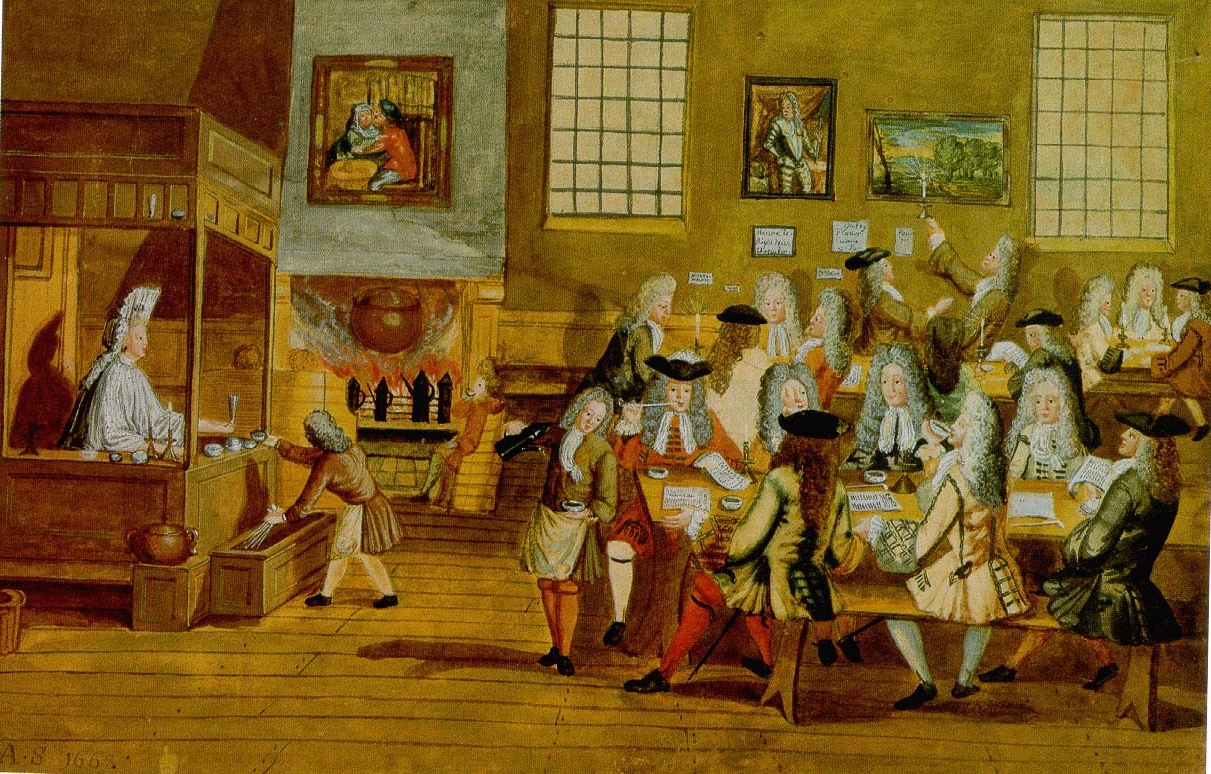
In 1652, in St. Michael's Alley in London's financial district, a Greek named Pasqua Rosée opened the city's first coffeehouse. It soon earned a nickname: "Penny University"—a cup of coffee cost one penny, and paying that penny bought you the right to walk in and debate. Here, you might sit between a nobleman and a cobbler—identity didn't matter; what mattered was only the quality of your argument. The growth was astonishing: by 1663, London had over eighty coffeehouses, and by 1739, more than five hundred and fifty.

Interior of a 17th-century London coffeehouse, anonymous painting
Interior of a 17th-century London coffeehouse (anonymous, c. 1690s) · Public Domain / Wikimedia Commons

Here, your birth doesn't count; only your argument counts.

— 17th-century London coffeehouse, the egalitarian spirit of the "Penny University"

This is precisely what sociology has repeatedly emphasized: a true "good place" is naturally egalitarian and neutral—it pulls people of different identities to the same table, precisely because they are different, not because they are the same. And when a room full of people with diverse backgrounds begins to converse as equals, what grows is far more than idle chatter.

§ 02 / Capitalism in Coffee Stains

Insurance, stocks, auctions,
all negotiated over coffee

1652
1686
1698
Lloyd's
London's first coffeehouse
Paris Procope café
Jonathan's → London Stock Exchange
Coffeehouse → Lloyd's of London

The Jonathan's Coffee House in London's Exchange Alley was where stockbrokers met and set prices—around 1698, the London Stock Exchange took shape over its coffee tables. The Lloyd's Coffee House on Lombard Street, opened by Edward Lloyd, gathered shipowners, merchants, and underwriters to exchange shipping news and underwrite voyages, eventually growing into Lloyd's of London and the entire modern marine insurance industry.

Coffeehouses were even dangerous enough to alarm the Crown. In late 1675, Charles II issued a proclamation attempting to suppress coffeehouses, calling them hotbeds of "spreading false news and sedition"—the resulting public outcry forced the ban to be withdrawn in just ten days or so. This episode恰恰 proved their weight: a place where strangers gather as equals to talk is itself a form of power.

§ 03 / The Parlor of Reason

The Encyclopédie,
reportedly born on a coffee table

In 1686, the Sicilian Procopio opened Café Procope on the Left Bank of the Seine; it remains in business today as Paris's oldest café. In the eighteenth century, it became the veritable "Enlightenment salon": Voltaire, Rousseau, Diderot, d'Alembert, and Beaumarchais all argued here over hot coffee. It is said that Diderot and d'Alembert's epoch-making Encyclopédie was conceived at this very coffee table.

The philosopher Habermas later gave such places an exalted name—the "public sphere." He said that eighteenth-century coffeehouses and salons were where "private people came together as a public": people read newspapers, argued, and formed public opinion here; a public reason independent of court and church rose from the steam of coffee. Its crux was packing "difference" into the same room: private individuals met as a public precisely because they were different from one another.

Two things of the modern world—markets and reason—
rose together from the steam of the same beverage.

§ 04 / The Ancient Formula, Unraveled

Gaiwan tea,
and the three lost things

"Good places" are by no means a Western patent. Chengdu's teahouses have been the most important public parlor of grassroots society for centuries: for the price of one cup of tea, you could sit all afternoon, chat, listen to storytelling, do business, or even ask the tea guests to publicly "mediate" disputes. Lao She's play Teahouse simply used a single "Yutai Teahouse" to contain half a century of China—the sign "No politics talk" often hung on the wall恰恰 proves that people couldn't resist talking politics.

In 1989, American sociologist Ray Oldenburg gave all of this a unified name. In The Great Good Place, he proposed the "third place"—neither home (first place) nor workplace (second place), but those places you can go to downstairs, without dressing up, where you can stay all afternoon just to chat: neutral, egalitarian, conversation-centered, accessible, with a crowd of regulars, relaxed atmosphere—a "home away from home." He warned that when these places disappear one by one, society slides toward isolation and fragmentation.

Looking back over these three centuries, we find something we've forgotten: learning, socializing, and doing business were originally one—it was modern division of labor that forcibly separated them into three different boxes: knowledge went into universities, idle talk into bars, transactions into office buildings. When China's AI-origin communities shout about the closed loop of "learning, socializing, and sales," they are actually unconsciously reviving the oldest formula of "good places." But reviving an ancient formula is easier said than done—the last person who wanted to turn "space" into a big business took a hard fall, while another who barely touches space became the biggest winner of this era.

§ 05 / Four Generations

Every era has its
signature "maker space"

Entering modernity, "making spaces for people who make things" has changed faces several times—and each face sold something different.

1970s–90s · Prehistoric

Garages and Clubs

Homebrew Computer Club, Jobs's garage—no business model, just a free gathering spot by accident, yet it incubated the personal computer revolution.

2005 — · Thriving

Accelerator · Y Combinator

Barely touches space; sells curation, capital, alumni network, and brand. Even stronger in the AI era.

2010 — · Bubble Burst

Coworking · WeWork

Sells space, treats "community" as marketing rhetoric. Peak $470B, then collapse, bankruptcy, change of hands.

2020 — · Ongoing

Hacker Houses · Pop-up Cities

Sells co-living, curation, and belonging: SPC, AGI House, Zuzalu, Cerebral Valley, Lift House. Real communities grow, but hard to scale.

2024 — · Definition Contested

AI-native · OPC Communities

Sells what?—the signature space hasn't crystallized yet; China's OPC community race is running the fastest.

The most dramatic scene on this timeline is two nearly contemporaneous names offering opposite answers. One treated space as a product and collapsed spectacularly; one barely touches space yet became the most thriving institution of the AI era. They are WeWork and YC.

§ 06 / An Expensive Counter-Lesson

WeWork:
treating community as marketing rhetoric

In 2010, Adam Neumann founded WeWork. Its story sounded incredibly sexy: not a sub-landlord, but a tech company "connecting people through space and changing the world," repeatedly invoking one word—community. SoftBank's Vision Fund kept pumping in capital; by early 2019, the valuation surged to $47 billion, making it one of the most valuable startups in America at the time.

But that summer, when the S-1 filing was laid open, the picture changed completely: 2018 revenue of $1.8 billion, but losses as high as $1.9 billion. Its invented "Community Adjusted EBITDA" stripped out real expenses like design, marketing, and management, dressing up losses as profits. The IPO was forced to cancel; Neumann resigned under pressure—yet walked away with an exit package of up to $1.7 billion, while SoftBank took over at a valuation under $8 billion.

2019 Peak Valuation
2018 Revenue/Loss
Neumann Exit Package
Bankruptcy/Change of Hands
$470B
$1.8B / $1.9B
$1.7B
2023 / 2024

The most biting footnote: Neumann turned around and founded Flow—a real estate company that stuffs "community feel" into apartment rentals, received a16z investment, and was valued at about $2.5 billion in 2025. WeWork's lesson is cold and clear: when a space sells mainly space itself, and community is just the packaging, then once the wind stops, it's nothing. Space has no moat.

§ 07 / The Triumph of Network

YC: barely touches space,
yet won

In 2005, Paul Graham, Jessica Livingston, and others founded Y Combinator. Its model is counterintuitive to the point of simplicity: it barely gives you space. What it gives you is a small sum of money (now about $500K for ~7% equity), three months of intensive refinement, a Demo Day before top investors, and—most valuable—an entry ticket to the alumni network and a gold-standard brand.

Over twenty years, YC has funded over five thousand companies with a combined valuation of about $600 billion, incubating giants like Airbnb, Stripe, Coinbase, DoorDash, and Instacart, with over a hundred becoming unicorns. In the AI era, it hasn't become obsolete—it's burning even brighter: the 2025 winter batch was about 80% AI companies, with the entire batch growing an average of 10% per week; about a quarter of the teams had 95% of their code written by AI.

WeWork bet on the table; YC bet on the people sitting beside the table, and the entire network behind the door.

— Twenty years later, the verdict is in

This reveals the deepest secret of maker spaces: its moat is never the table itself, but the people beside it and the network behind the door. WeWork reversed cause and effect, so it collapsed; YC got it right, so it thrives more than ever.

§ 08 / Same Era, Two Philosophies

Sell space,
or sell network?

WeWork · The Real Estate Lesson
  • Treated space as product, "community" as marketing rhetoric
  • SoftBank funded, leased and subleased for scale; bigger meant more losses
  • $470B → IPO collapse → 2023 bankruptcy → 2024 change of hands
  • Moat: virtually none; atmosphere dissipates when the wind stops
YC · The Triumph of Network
  • Barely touches space; sells "getting into this circle"
  • Curation (~1% acceptance) + capital + alumni network + brand
  • 5000+ companies, ~$600B total valuation, 100+ unicorns
  • Moat: network effects; even stronger in the AI era

The 2020s Third Path: Hacker Houses

Between the two poles of WeWork and YC, the 2020s grew a third path—returning to the oldest formula: co-living, curation, belonging. San Francisco's AGI House gathers AI builders into one building, hackathons by day, dinner with unicorn founders by night; South Park Commons calls itself an "anti-accelerator," specifically accompanying those who "haven't figured out what to build yet"; Vitalik's Zuzalu / Edge City brings hundreds of people to the seaside to live together for a month or two, experimenting as they go. They genuinely grow communities—at the cost of being high-threshold, elite-leaning, and hard to scale.

§ 09 / 2026 Global Scan

Hacker houses
are simultaneously platformizing

Zoom into the last two years, and the third path is no longer a few isolated experiments. Every "good place" starts with a small group's spontaneous gathering—hacker houses, shared desks, neighborhood cafés—but once validated as effective, almost without exception, they are rapidly "platformized" by capital or media. This time, China's AI-origin communities (see the other article in this series, "China Chapter") are not an exception, but the newest and fastest-running sample in this global pattern.

Journalist Eric Newcomer at the Cerebral Valley AI Summit, March 2023
Cerebral Valley AI Summit, March 2023 · CC BY-SA 4.0 / Wikimedia Commons
Wudaokou Hayes Valley East London New York Xuhui Shenzhen Hangzhou

Dashed lines do not represent actual collaboration; they merely indicate that these nodes, in nearly the same time window, each completed the same transition from "spontaneous gathering → platformization/policy-ization"—for specifics on Wudaokou, Xuhui, Shenzhen, and Hangzhou, see the "China Chapter"

Project / City
Key Features
Scale Data
Silicon Valley · Hayes Valley
Cerebral Valley
Evolved from 21-bedroom hacker house Genesis House into AI builder media/events brand
100K+ newsletter subscribers · global events
London · East End
Lift House
Anti-Silicon Valley burnout "Londonmaxxing"; flexible stays from 1 month
2026 London AI funding $12B (of total $14.8B)
New York
AI Tinkerers + HOPE
Regular builder meetups + demo days
August HOPE conference returns to Manhattan

Sources: SF Standard · Washington Post (paywall; see also TechCrunch's 2023 coverage of Cerebral Valley AI Summit) · TechCrunch · Northeast Times (full list at end of article)

▸ Why did these nodes appear almost simultaneously? Click to see the common pattern
Starting point — a small group's spontaneous gathering: hacker house, shared desk, neighborhood café; no business model, just shared interest
Inflection point — once validated as effective (breakout cases, media coverage, celebrity check-ins), capital or government quickly follows
End point — platformization (matchmaking transactions, media brand) or policy-ization (subsidies, certification, district planning); original spontaneity fades

From hacker house to media brand, from neighborhood nickname to city KPI, the forms differ, but the direction is strikingly consistent: turning "gathering together" from a spontaneous act into a business that can be planned, invested in, and measured. Put the three models side by side, and the real gap of the AI era becomes clear: WeWork proved pure space doesn't work; YC proved network and curation are king—but YC only admits ~1%, takes equity, and forces you to sprint at unicorn speed; it gives you a ticket into the circle, but not a "home" you can return to every day where you won't be kicked out for failing. Hacker houses provide belonging, but are too expensive, too selective, too small.

Those who sold space collapsed; those who sold network won,
but no one is building a daily home
for "the other 99%."
— The real gap of the AI era
§ 10 / First Learn to Step Aside

Making a good place isn't designing
a building, it's cultivating an ecology

This global gap is precisely the prescription this article aims to fill—breaking down "how to make a good place" into seven actionable rules. But first, remember a piece of advice from the public space research organization PPS: "To make a great third place, first learn to get out of the way." A good place is not a refined building that's been designed; it's an ecology that's been "cultivated"—the designer's task is to set up the skeleton, plant the hooks, and then yield the starring role to the people who come.

§ 11 / Seven Rules

Seven rules for public space
in the AI era

Good Place SEVEN RULES 01 Mix, Don't Purify 02 Schedule Serendipity 03 Low Threshold 04 Local Density 05 Physical Presence 06 Learning as Public Good 07 Useless Whitespace
01

Mix, rather than purify

Stitch learning, work, socializing, and trading together so people have reasons to stay long and return often. A pure café can't retain people; a pure desk can't retain souls.

Example Gifu's "Media Cosmos" (Toyo Ito design) packs a library, market, and gathering space into one; a Chengdu teahouse fits storytelling, business, and dispute mediation into one cup of tea.

02

Schedule serendipity

Serendipity is too important to leave to chance. Use fixed rituals—study nights, pitch events, open mics, shared meals—to create high-frequency, low-pressure encounters. The joy of surprise can be designed.

Example YC's weekly dinner, unchanged for twenty years; San Francisco's AGI House—hackathons by day, dinner with unicorn founders by night.

03

Low threshold, nurture regulars

Make it "easy to enter" (open, cheap, no justification needed) and "worth staying" (familiar faces, a sense of belonging). The soul of a third place is the regulars who treat it as a second home.

Example 17th-century London's "Penny University"—one cup of coffee bought the right to enter and debate; New York's Recurse Center is permanently free for participants, funded by recruiting commissions.

04

Local high density

Public space is not an island; it must be embedded in a real industry and talent ecology. The concentration within a 500-meter radius beats an empty influencer park. Geography still matters—especially in an era when everything can be remote.

Example The "15-minute city" (Carlos Moreno) makes proximity the first principle; the Plaza de España is an "outdoor living room" shared by all ages.

05

Insist on physical presence

Deliberately resist screens; create an irreplaceable sense of "being in the same room." The more AI can simulate companionship, the more precious real, embodied, sometimes-awkward-sometimes-laughing presence becomes.

Example New York's High Line (abandoned elevated railway turned aerial promenade) proves: a path that makes people want to slow down and walk side by side is itself the best social organ.

06

Treat learning as a public good

In an era when skill half-lives are measured in months, continuous learning is the strongest adhesive. Night-school-style lifelong learning is both a necessity and the most natural reason to turn strangers into "classmates."

Example Philosopher Ivan Illich argued in the 1970s for "deschooling," returning learning to the community itself; New York's Recurse Center's residential peer learning is a contemporary practice.

07

Leave "useless" whitespace

This is the hardest and most critical rule. Don't make every interaction lead to a transaction. Protect the non-monetizable chatting, observing, and daydreaming—publicness lives precisely in the corners that efficiency cannot illuminate.

Example Illich's Tools for Conviviality: good tools should "amplify human autonomy" rather than turn people into appendages; Zhuangzi long ago spoke of the "usefulness of the useless."

Synthesis

One-sentence metric

The seven rules ultimately serve one simple question: after work, after shutting down their agents, are people still willing to make a trip just to "see people"?

If yes, it's a good place; if no, no matter how beautiful the renovation, it's just a sub-landlord.

When these seven rules were first written down, they were a private checklist. In 2026, China wrote something similar into standards: on March 12, the Suzhou AI Industry Association, together with nearly 40 organizations, released the nation's first OPC community group standard, OPC Community Construction and Service Evaluation Guide (T/SZAI 001-2026), paired with a "POWERS Empowerment Six-Force Model"—Pioneer Talent Aggregation, Opportunity Engine Drive, Whole-journey Accompaniment, Ecosystem Network Linkage, Return Growth Acceleration, and Professional Service Support; in June, Ningbo followed with AI OPC Community Construction and Evaluation Specification (T/NBSIA 023-2026), grading across five dimensions: industry cultivation, factor assurance, resource import, ecosystem construction, and community service. For the first time, "good places" have quantifiable metrics that can be scored, rated, and used to apply for subsidies.

Seven Rules
Corresponding Dimensions in Public Group Standards
01 Mix, don't purify
Ningbo's "Ecosystem Construction / Community Service" dimensions touch the edges
02 Schedule serendipity
POWERS "Opportunity Engine Drive (O)" partially covers
03 Low threshold
Opposite direction—group standards govern community qualification thresholds, not entrepreneurs' entry cost
04 Local density
"Pioneer Talent Aggregation (P)" + "Ecosystem Network Linkage (E)"—best coverage
05 Physical presence
No direct metric
06 Learning as public good
"Whole-journey Accompaniment (W)" + "Professional Service Support (S)"
07 Useless whitespace
No direct metric

Mapped by the dimension names publicly disclosed in the two group standards, not by line-by-line comparison of the full standard text. Sources: Yangtze Evening News / Jiaohuidian · Ningbo Daily.

Standardization is progress: it pushes this business from "scale expansion" toward "quality improvement," and gives entrepreneurs a ruler for evaluating communities. But the two blank cells remaining after the mapping are precisely the two rules this article values most—physical presence and "useless" whitespace are inherently resistant to metricization: what can be measured are deliverables, growth, and transactions; what cannot be measured is the time allowed for failure and the non-monetizable conversations. This is not a uniquely Chinese problem; WeWork also treated the quantifiable parts (desk count, occupancy rate, growth curve) as the product itself. For the complete inventory on the China side, see the China Chapter's § 16 "One Year Later Inventory".
§ 12 / Builder's Humility

The best design
is leaving room for people

Connect the seven rules, and you find they all point to the same disposition: builder's humility. WeWork's mistake was wanting too much to "design" community, to monetize every inch of space; while London's coffeehouses, Chengdu's teahouses, and New York's Recurse Center endure precisely because they are willing to yield control—set up the stage, then step aside.

You cannot "manufacture" a community;
you can only build a place where a community
is willing to grow on its own.

These seven rules are, in the end, means. They serve a more fundamental conviction—a question not yet directly answered: in an era when machines can do almost anything, why must people still "be together"? This question belongs neither to urban planning nor to business models; it belongs to philosophy.

§ 13 / A Substitution

Getting things done
living well

The most seductive promise of the "one-person company" is that "one person can still get things done." But hidden in that sentence is a substitution: getting things done and living well were never the same thing. Twenty-three hundred years ago, Aristotle drew this line clearly—humans are "political animals," naturally meant to live in community; a being capable of living in isolation without needing others "is either a beast or a god." The polis exists not merely to enable people to "live," but to enable them to "live well."

What AI does, precisely, is drive the cost of "living" down to the floor—making a living, producing, making things are all getting cheaper. But precisely because of this, it pushes the higher question, starkly, before every "super-individual": you can get everything done now, and then? This question cannot be answered by a desk, by compute, or by subsidies. It must be sought in philosophy.

§ 14 / Six Answers

Why must people
crowd into the same room

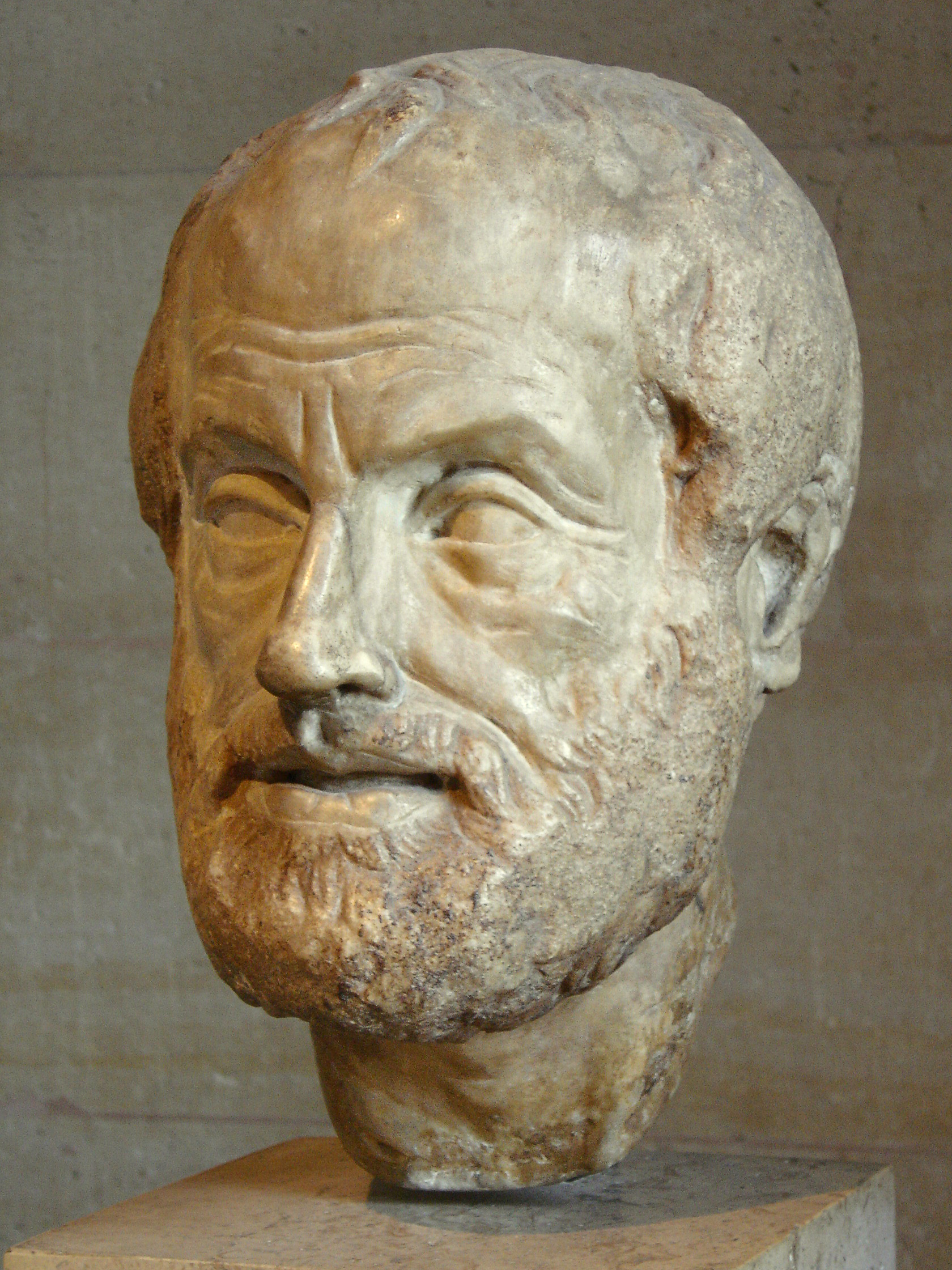
Bust of Aristotle, Louvre Museum
Aristotle

Humans are political animals

"He who is unable to live in society is either a beast or a god." The polis exists not for living, but for living well—getting things done ≠ living well.

Hannah Arendt, 1933 portrait
Hannah Arendt

Space of appearance

Labor, work, and action as a triad. Machines can replace our labor and fabrication, but not "action"—it occurs only where others are present.

Robert Putnam

Bridges, not just glue

"Bonding" social capital is superglue; "bridging" social capital is the lubricant. An echo chamber, however warm, grows nothing new.

Zhuangzi

Usefulness of the useless

"Everyone knows the usefulness of the useful, but no one knows the usefulness of the useless." The gnarled tree survives because it's useless for timber—a space with only "useful" things kills what makes it endure.

Byung-Chul Han

Achievement subject

We have become self-driven, self-exploiting "achievement subjects." The digital "crowd" is not a community; a like is not an encounter; the Other is disappearing.

Marx

Association of free individuals

Owning the means of production, yet facing the market more alone—alienation returns in new forms. The remedy is not stronger tools, but reconnecting people.

Portrait sources: Louvre Aristotle bust · CC BY-SA 2.5 · Hannah Arendt 1933 · Public Domain (Wikimedia Commons)

§ 15 / Action, and Bridges

Some things
cannot be done alone

Arendt's distinction is especially sharp. She divides human activity into three layers: labor (repetitive maintenance of survival), work (the craft of fabricating objects), and action (speech and concerted action among people). AI is rapidly taking over the first two—it can labor and it can fabricate. But "action," by definition, cannot be completed alone: it requires plural humans, a space where they "appear" to one another. Her famous dictum seems written for this era—"Power arises when people act together, and disappears as soon as they disperse." A desk can be remote; compute can be in the cloud; but "action" cannot be outsourced, because its precondition is that others are genuinely present.

Sociologist Putnam supplies the other half. In Bowling Alone, he distinguishes two kinds of "social capital": bonding is superglue, binding similar people ever tighter; bridging is the lubricant, connecting you to different people and worlds. A room where seven out of ten are twenty-something AI enthusiasts is excellent "glue" but a barren "bridge." And genuine creation almost always comes from people who "shouldn't be in the same room" meeting—this is precisely what Habermas meant: the crux of the public sphere is "meeting because of difference."

Here lies a trap we must be vigilant against. Anthropologist Marc Augé proposed "non-places"—airports, chain stores, highways: spaces that are interchangeable, designed only for passing through, not for staying; devoid of identity, relationships, or history. If an OPC space has only standard desks and transaction KPIs, it will degenerate into a "non-place" for passing through, not a "good place" for staying.

§ 16 / Uselessness, and Alienation

The sharpest
cut

The Chinese philosophical tradition gives the repeatedly invoked "useless whitespace" an older name. Zhuangzi spoke of the "usefulness of the useless": the gnarled tree that wasn't cut down because it was useless for timber—precisely because it was "useless," it could flourish and provide shade for everyone. A place that converts every encounter into a transaction and fills every inch of space with KPIs may look efficient, but is actually sawing off its own trunk with its own hands.

And the sharpest cut comes from philosopher Byung-Chul Han. He says we have gone from disciplined "subjected individuals" to self-driven "achievement subjects"—no longer with an external boss, because each person has become their own boss, employee, and exploiter. The "one-person company" is precisely its completed form: you finally own the means of production (a computer plus a swarm of agents), but therefore also bear all the market's risks and all its loneliness alone. This is exactly what lets Marx's "alienation" return in new forms—the stronger the tools, the more people may be estranged from others and from themselves. And Marx's direction is precisely the endpoint this series has been building toward: the remedy is not sharper tools, but an "association of free individuals"—a place that can reconnect the scattered.

We can outsource production to agents,
but we cannot outsource "becoming human."

§ 17 / Back to the Origin

The formula for good places
hasn't changed in three centuries

Thus, the philosophical status of public space in the AI era is fundamentally elevated. It is no longer an accessory to production, but infrastructure for resisting alienation and enabling "action" and "meaning" to occur. Outsourcing "being together" to machines is this era's greatest illusion—because it is precisely "being together" itself, not its products, that is the part of being human that cannot be automated.

A cup of coffee three centuries ago, a gaiwan tea in Chengdu, the bar counter in Wudaokou that changes face between day and night (described in the other article in this series)—they continue the ancient impulse of humans spontaneously creating "good places." This formula hasn't changed in three centuries—what has changed is that this time, when machines have taken over nearly all the "doing," we must consciously, with our own hands, rebuild it. This doesn't require policy or a district to happen: it can be a break room in a company where KPIs aren't discussed, a bookstore in a neighborhood willing to let people sit all afternoon, or a few friends liberated by AI into "one-person" operations, agreeing to gather every week, each writing their own code.

Machines can do nearly all the "doing" for us,
but they cannot do "being together" for us.
— This is the entire reason we still need a common room in the AI era

Three centuries of third-place history repeatedly validate the same formula—learning, socializing, and doing business were always one; and the two answers WeWork and YC offered in the same era show that: the moat of a maker space is never the table itself, but the people beside it and the network behind the door. The 2020s hacker house wave is the world simultaneously filling a gap that neither WeWork nor YC addressed—and this gap ultimately requires seven rules to answer "how to make" and six thinkers to answer "why": Aristotle, Arendt, Putnam, Zhuangzi, Byung-Chul Han, and Marx, from six different angles, all point to the same conclusion—production can be outsourced to agents, but "becoming human" cannot.

Starting from the bar counter in Wudaokou that changes face between day and night (see the "China Chapter"), passing through three centuries of third-place history, the two lessons of WeWork and YC, the globally synchronized hacker house wave of the 2020s, we finally land on a simple sentence: may you and I both find—or build with our own hands—the "good place" of this era.

After work, after shutting down their agents,
are people still willing to make a trip
just to "see people"?

If yes, it's a good place; if no, no matter how beautiful the renovation, it's just a sub-landlord. This history and methodology answer "why" and "how to make"—and "who is making it fastest and most authentically," the answer is in China. See the "China Chapter": from the Origin Academy in Wudaokou, to the OPC race across a dozen cities nationwide.

Good Place · Public Space in the AI Era · Series

This series has 2 articles

The original five source pieces from July–August 2026 were merged in August 2026 into the International Chapter (history · global race · methodology and philosophy) and the China Chapter (Origin Academy case · national OPC race · policy reflection).

China Chapter
Origin Academy · National OPC Race · Policy Reflection
International Chapter · This Article
From London Coffeehouses to a Global Good Place Methodology
Three Centuries of History · WeWork/YC · Seven Rules · Philosophical Inquiry

Update Log

4 versions total
  1. v4 § 11 added "Seven Rules vs China Group Standards" mapping: March 2026 Suzhou T/SZAI 001-2026 OPC Community Construction and Service Evaluation Guide's POWERS six-force model, June Ningbo T/NBSIA 023-2026's five-dimension grading, mapped against the seven rules by publicly disclosed dimensions, noting that "Insist on Physical Presence" and "Useless Whitespace" have no corresponding metrics, with cross-link to China Chapter's new § 16 "One Year Later Inventory"; Cerebral Valley section's Washington Post paywall citation supplemented with a publicly accessible TechCrunch 2023 report as a parallel source View v4
  2. v3 Major restructuring: per user request, original five-article series merged into two. This article (International Chapter) absorbed all content from the original "How to Make a Good Place" (seven rules, six thinkers' philosophical inquiry), as well as the global comparison section from "From Wudaokou to Hayes Valley" (Cerebral Valley/Lift House/AI Tinkerers, Cerebral Valley Summit actual photo, global node connection diagram); China-related content (Origin Academy case/national OPC map/policy concerns) moved to companion "China Chapter" (scene-and-loneliness.html). Three old slugs (china-opc-race, playbook-and-philosophy, global-race-and-policy) are offline View v3
  3. v2 Added 17th-century London coffeehouse interior historical engraving (Public Domain, Wikimedia Commons) View v2
  4. v1 Initial release: merged and reorganized from the "Good Place · Public Space in the AI Era" series EP3 (The Modern World Grew Out of a Cup of Coffee) and EP4 (WeWork Died, YC Won), covering London coffeehouse history, public sphere theory, third place theory, Chengdu teahouses, four generations of maker spaces, WeWork rise-and-fall and Y Combinator network effects comparison View v1